
Light Therapy Pelvic Wand
TARGETED PELVIC RED LIGHT THERAPY FOR FERTILITY, POSTPARTUM RECOVERY, PELVIC PAIN, MENOPAUSE AND OVERALL PELVIC HEALTH.
The only pelvic wand I recommend for internal photobiomodulation.
Designed for vaginal use with medical-grade silicone, consistent light output, and comfortable insertion. Delivers red, near-infrared, and blue wavelengths to support circulation, tissue repair, inflammation, and pelvic floor function.
Women use this wand for fertility support, painful intercourse, postpartum healing, menopausal changes, chronic pelvic pain, and recovery after trauma or surgery. If you want an internal device that reflects the standards I follow in practice, this is the one I trust.
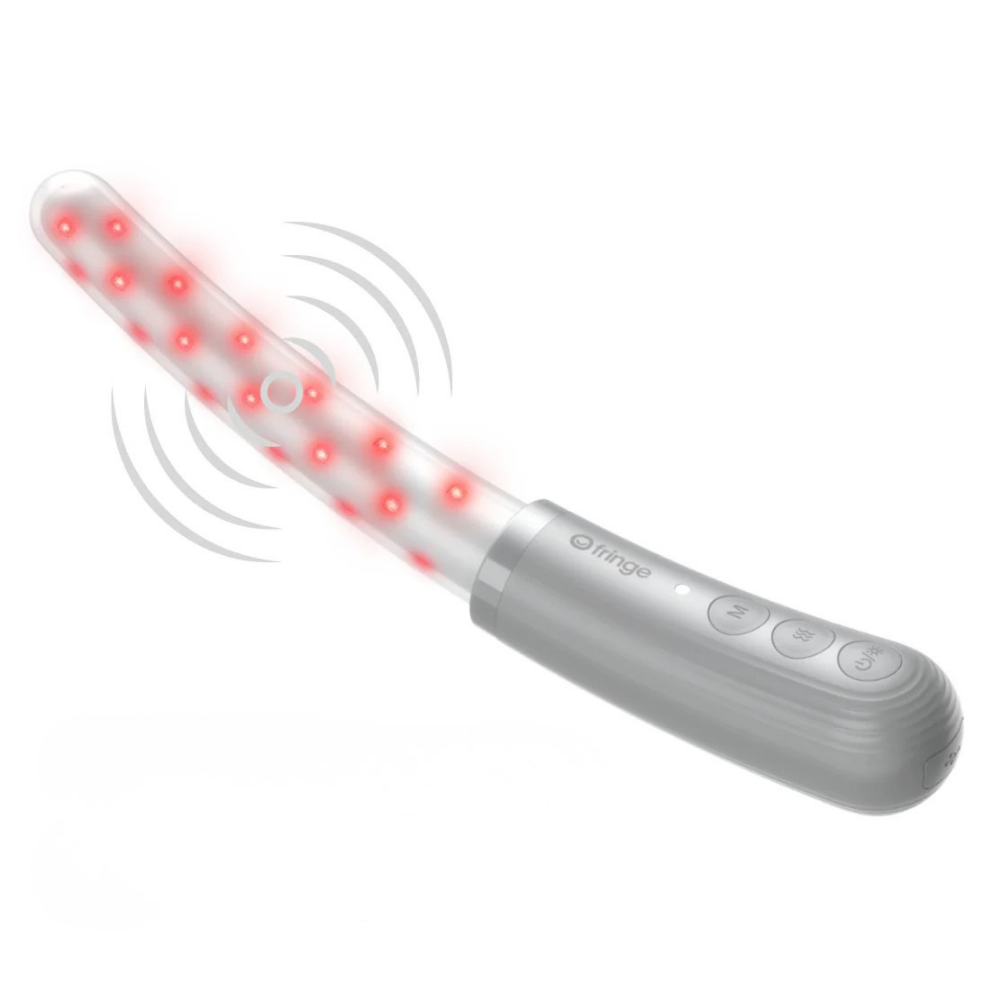
Designed for comfort, healing, and targeted pelvic treatment.
Medical-grade soft silicone for comfortable internal and external use
Three light modes using red (630 nm), near-infrared (830 nm), and blue (415 nm) LEDs
Optional vibration setting to support relaxation and circulation
Cordless and fully waterproof
Simple 10-minute automatic session timer
Rechargeable and easy to clean
Gives you a precise, gentle way to support pelvic healing and overall comfort at home.
-
LED Lights
12 W Wand - 39 x 0.3 W, medical grade, LED Lights
3 LED light chips/light - 117 total LED light chips for uniform light coverageLight Wavelength
630nm (Red): 830nm (Near-Infrared): 415nm (Blue) wavelengths in a 1:1:1 ratio
1 RED light chip (630nm), 1 NIR light chip (830nm), 1 Blue light chip (415nm)Light Irradiance or Intensity
20–40 mw/cm2 maximum intensity at 0”
Sun-like intensity
Continuous wave of light - no pulsingLight Use & Adjustability
Automatic 10-minute timer
3 modes of use:
Mode 1 - Deep Rejuvenation, Red/Near Infrared Light (630nm & 830nm)
Mode 2 - Antibacterial/Antimicrobial, Blue Light (415nm)
Mode 3 - Rejuvenation, Red Light (630 nm)
2 levels of light brightness - 100 percent or 50 percentVibration Massage Use
Optional vibration massage function
10, 50, 90 or 120 Hz levels at 2.3 VBattery
Li-polymer battery, 2600mah
6+ uses per charge
3–4 hour charging timeUSB-C Charging Adapter
Rated input–output 5V–2ASize & weight
9.4” x 1.4”
0.35 lbs, light and convenientMaterial
Soft and durable water-resistant, medical grade silicone cover with BPA free plastic interior
Waterproof level IPX6 or aboveWarranty
1 Year Limited WarrantySafety – EMF & Light Flicker
EMF – 0.0mG at 0”
Light Flicker - Less than 1 percent, easy on the eyes
No Bluetooth, latex, or BPAConformance
FCC, ROHS, CA Prop 65, IPX6 WaterproofFDA
Categorized under low risk and general wellness category. “General Wellness: Policy on Low Risk Devices” issued by FDA Sept. 27, 2019 -
Pelvic Light Therapy Wand
USB-C charging cord and USA-plug power adapter
Carrying case
User guide
One-year limited warranty
Personalized treatment protocol included with purchase

Free US Shipping On Orders Above $500
1 Year Limited Warranty

Discrete Packaging

Free Personalized Treatment Protocol




WHY SHOULD YOU PURCHASE YOUR FRINGE PELVIC WAND HERE?
Using a pelvic red light therapy wand is not guesswork. The results depend on wavelength, dose, depth, timing, frequency, and where the light is placed. Different pelvic concerns respond best to specific patterns of use, not general instructions or trial and error.
When you purchase your wand from me, you receive a personalized protocol that matches the device’s technical capabilities with your health history and the issue you want to improve. This removes uncertainty and gives you a clear plan based on evidence, not assumptions.
Treatment-Specific Protocols Are Essential
A Personalized Treatment Protocol Is Included
01
Purchase your wand
After placing your order, you'll receive an order confirmation email with instructions for the next step in creating your personalized treatment protocol.
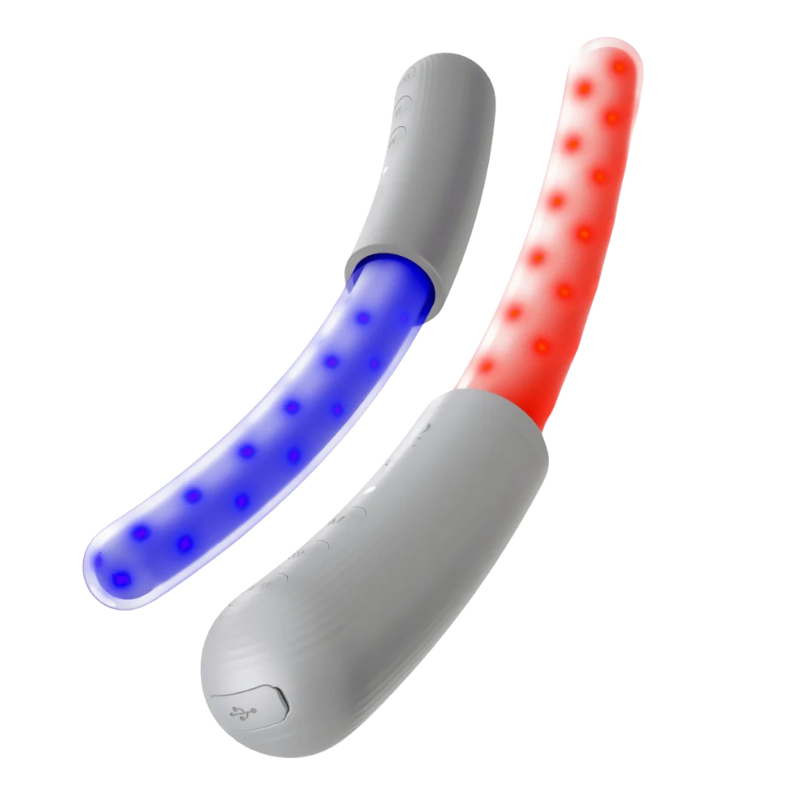
Designed for comfort, healing, and targeted pelvic treatment.
Medical-grade soft silicone for comfortable internal and external use
Three light modes using red (630 nm), near-infrared (830 nm), and blue (415 nm) LEDs
Optional vibration setting to support relaxation and circulation
Cordless and fully waterproof
Simple 10-minute automatic session timer
Rechargeable and easy to clean
Gives you a precise, gentle way to support pelvic healing and overall comfort at home.
02
Complete your questionnaire
Your clinical assessment captures detailed information about your condition, symptoms, health history, and treatment goals so Tracy can develop a treatment protocol specific to your individual needs.

03
Receive your personalized protocol
Tracy will use the information from your clinical assessment to personally develop your evidence-based treatment protocol. Your personalized protocol will be delivered by email within 5–7 business days.
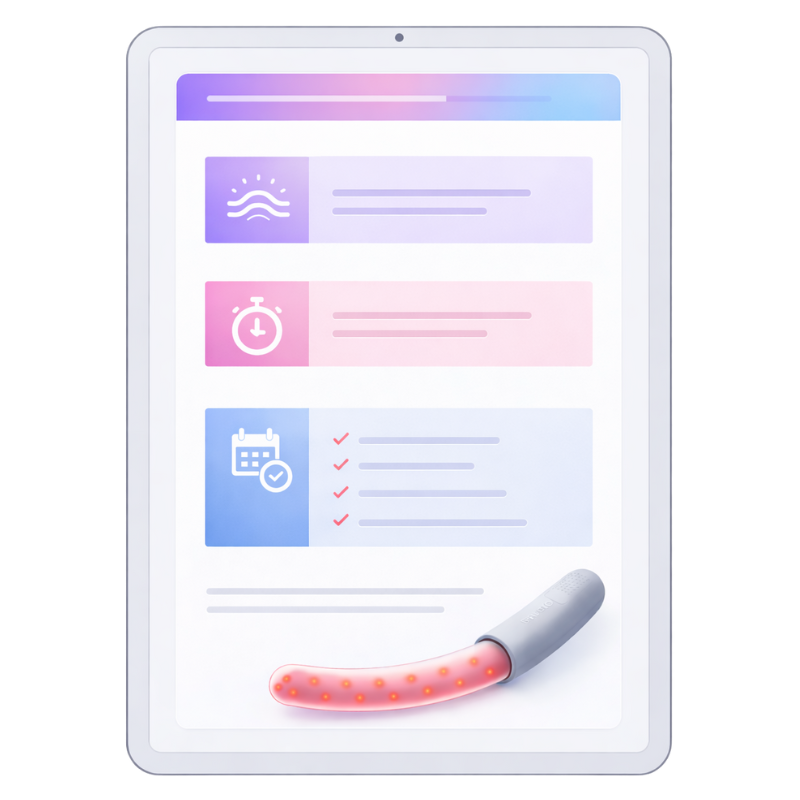
NOTE: When purchasing more than one device, Tracy will develop a single personalized treatment protocol that coordinates the use of all of your devices to achieve the most effective therapeutic outcome.
Light Therapy for a Wide Range of Pelvic Health Needs
Targeted applications
Pelvic light therapy can help improve circulation, reduce inflammation, support tissue repair, and calm nerve-related discomfort. This wand is designed for the conditions where consistent, localized light makes a meaningful difference in comfort, function, and recovery.
Common Uses

Vulvar Discomfort Or Dryness
Recurrent Yeast Infections Or BV
Menopause-related Changes
Perineal Scar Tissue
Nerve Irritation Or Sensitivity
Pelvic light therapy is often used for a primary issue like fertility, pain, or dryness, but it becomes even more valuable over time because it supports the day-to-day things that come up for many women, including flare-ups of yeast infections, BV, irritation, or pelvic tension.
How Does Pelvic Light Therapy Work?
Pelvic light therapy uses specific wavelengths of red and near infrared light to support cellular repair, circulation, and tissue comfort in the pelvic region. These wavelengths interact with the mitochondria inside your cells, increasing ATP production and improving the way tissues manage inflammation, blood flow, and recovery.
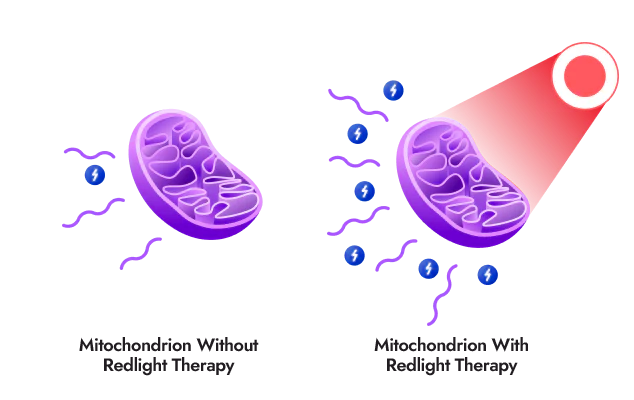
Because pelvic tissues include highly responsive mucosal surfaces, light can reach deeper layers than it can on external skin. This allows therapeutic wavelengths to influence areas connected to fertility, sexual comfort, pelvic floor tension, postpartum healing, vulvar dryness, and nerve related discomfort.
When light enters the tissue, several changes occur at the cellular level:
ATP increases, which improves cellular energy and function.
Blood flow improves through nitric oxide release.
Inflammation signals shift, supporting tissue repair.
Nerves and muscles respond with improved regulation and reduced tension.
These effects make pelvic photobiomodulation a useful support tool for concerns that benefit from better circulation, healthier tissue metabolism, and steady, repetitive signaling to the pelvic floor and surrounding structures.
Pelvic light therapy is non invasive, non thermal, and can be used internally or externally depending on the goal. The therapeutic value comes from delivering the correct wavelengths at consistent power levels, with enough contact time to influence deeper tissues.

Because pelvic tissues respond differently depending on the wavelength, depth, duration, and position of the wand, outcomes depend less on simply using the device and more on using it correctly. More time is not always better, and random placement rarely reaches the tissues involved in fertility, pelvic pain, postpartum healing, vulvar discomfort, or nerve related issues. The right protocol, built around your specific concern, is what makes pelvic light therapy effective.
Why Clinicians Are Using Red Light for Pelvic Health
Photobiomodulation is no longer limited to musculoskeletal care. Clinicians in pelvic health, reproductive medicine, postpartum recovery, sexual health, and menopause care use targeted red and near-infrared light because it supports the tissues involved in circulation, inflammation, nerve regulation, and cellular repair.
Pelvic tissues respond extremely well to light because they include mucosal surfaces, dense vascular networks, hormone-responsive structures, and areas that rely heavily on mitochondrial activity. When these tissues receive the right wavelengths at the right dose, we see improvements in comfort, blood flow, tissue quality, and overall pelvic function.
This is why PBM is being used alongside care plans for fertility-related pelvic issues, painful intercourse, postpartum healing, perineal or cesarean scar work, pelvic floor tension, vulvar discomfort, nerve irritation, and menopause-related dryness.
“Mucosal tissue, blood flow, hormones, nerves, and mitochondrial activity all converge in the pelvis.
That’s why targeted light therapy makes such a measurable difference.”

The Science Behind Wavelengths, Irradiance, and Dosage
Not all pelvic light therapy devices are the same. The wavelengths, power density, and total dose determine whether light actually reaches the tissues that matter. Understanding these three elements helps you choose a device that can support fertility goals, postpartum recovery, pelvic pain, sexual comfort, and menopause-related concerns.
-
Pelvic photobiomodulation uses specific wavelengths because different tissues respond to different depths of penetration.
Red light at 630 nanometers supports superficial structures, mucosal tissue, circulation, and surface-level inflammation.
Near infrared light at 830 nanometers reaches deeper, influencing blood flow, mitochondrial function, nerves, and hormone-responsive pelvic structures. This is the wavelength most associated with internal pelvic repair, fertility support, and nerve or muscle tension.
Blue light at 415 nanometers works on the surface level and offers antimicrobial support for conditions involving irritation, microbiome imbalance, or healing needs following birth.
The wand delivers all three wavelengths in a balanced ratio so internal and external areas receive consistent, predictable coverage.
-
Irradiance is the amount of light energy that reaches the tissue, measured in milliwatts per square centimeter.
Low-power devices may glow brightly but still fail to deliver a therapeutic dose, especially if they are not used in full skin contact.
The wand provides twenty to forty milliwatts per square centimeter at the surface. This is appropriate for internal mucosal tissues, where less power is required for meaningful absorption, and helps support pelvic floor function, circulation, and tissue repair without overheating.
-
Dosage refers to the total energy the tissue receives over time, measured in joules per square centimeter.
Too little energy and tissue change is minimal.
Too much energy and the biphasic dose response can reduce effectiveness.The wand’s ten-minute automatic cycle provides a consistent, repeatable dose so the tissue receives steady input without risking overstimulation.
Because pelvic concerns vary widely - fertility goals, scar healing, nerve irritation, postpartum recovery, dryness, pelvic floor tension - the appropriate dosing schedule is different for each condition. This is why evidence-based protocols matter and why buyers receive a personalized plan with the device.
“Effective pelvic light therapy depends on calibrated dosing, not guesswork.”
SAFE TEMPERATURES, ACCURATE WAVELENGTHS, CONSISTENT POWER
Engineered for Internal Photobiomodulation
Internal light therapy requires precision. The wavelengths, output, materials, and temperature control must all meet clinical standards for pelvic tissues. The Fringe Pelvic Wand delivers consistent red, near infrared, and blue light, maintains safe surface temperatures, uses medical-grade silicone, and provides stable irradiance along the full length of the shaft. The design is flexible, comfortable, waterproof, and built for predictable ten minute treatments.
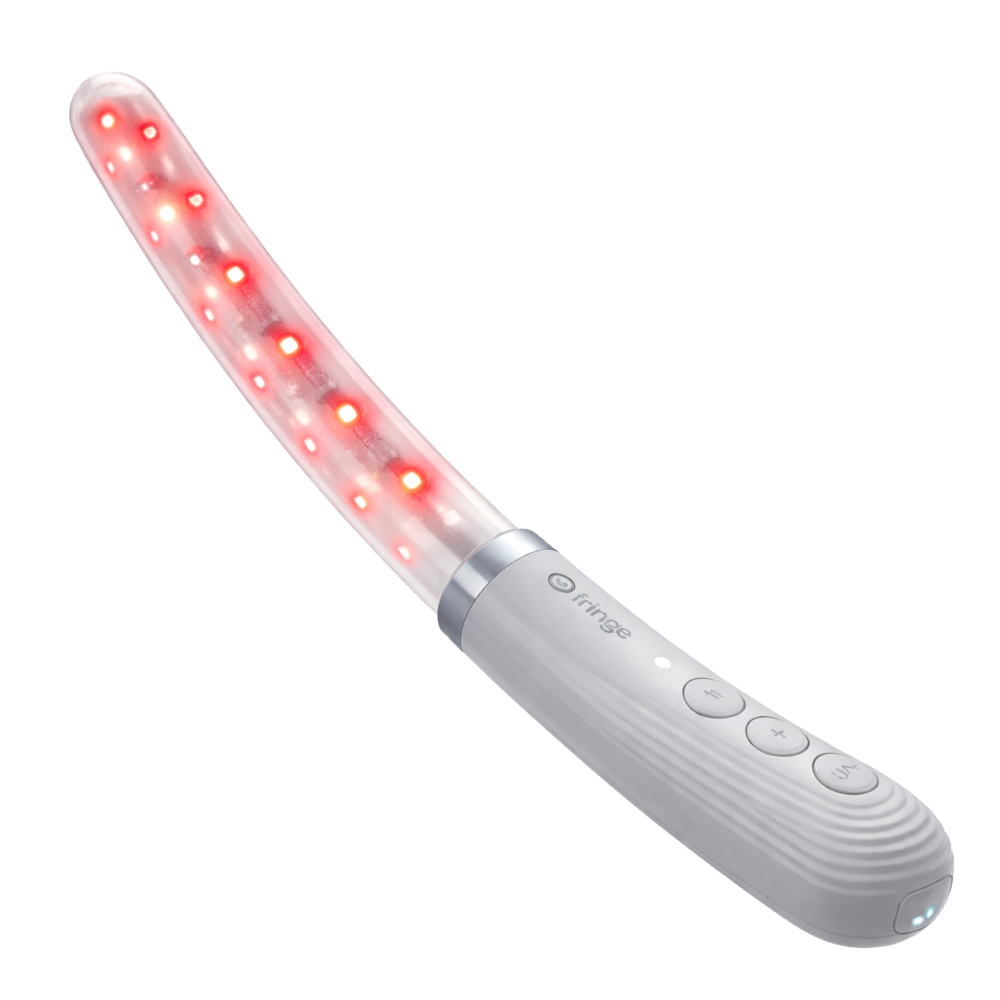
Designed for comfort, healing, and targeted pelvic treatment.
Medical-grade soft silicone for comfortable internal and external use
Three light modes using red (630 nm), near-infrared (830 nm), and blue (415 nm) LEDs
Optional vibration setting to support relaxation and circulation
Cordless and fully waterproof
Simple 10-minute automatic session timer
Rechargeable and easy to clean
Gives you a precise, gentle way to support pelvic healing and overall comfort at home.
Wavelengths: Red, NIR, and blue for different tissue depths


Power Delivery: Stable output with no drop-off and no pulsing
Safety: Cool operation, medical-grade silicone, no EMF output
Comfort: Flexible silicone, smooth shape, appropriate dimensions
Design: Waterproof, cordless, optional vibration, automatic timing
COMFORT. SAFETY. CORRECT WAVELENGTHS. RELIABLE OUTPUT.
Pelvic Wands: What Matters Most
A pelvic wand only works if it can deliver the right light, at the right depth, through materials that are safe for internal use. Internal PBM depends on mucosal absorption, consistent irradiance, and a design that stays cool, comfortable, and stable during a full ten-minute session. Most wands fall short in at least one of these areas.
-
Red, near infrared, and blue light all have different roles in pelvic tissue health.
-
Stable, predictable output along the full length of the wand. No drop-off zones.
-
Medical-grade silicone, no overheating, no EMF output, and a design that stays comfortable for internal tissues.
-
Internal tissue responds differently than external skin, so the wand must be built for true mucosal absorption and depth.
-
Smooth, flexible silicone, appropriate dimensions, and a shape that allows correct placement without irritation.
-
Useful for circulation and nerve support when paired with light therapy, but only when optional and quiet.
-
Waterproof, cordless, easy to clean, and timed for predictable sessions.
Designed for comfort, healing, and targeted pelvic treatment.
Medical-grade soft silicone for comfortable internal and external use
Three light modes using red (630 nm), near-infrared (830 nm), and blue (415 nm) LEDs
Optional vibration setting to support relaxation and circulation
Cordless and fully waterproof
Simple 10-minute automatic session timer
Rechargeable and easy to clean
Gives you a precise, gentle way to support pelvic healing and overall comfort at home.
How the Most Common Pelvic Wands Compare Clinically
DESIGNED FOR VAGINAL USE (AND WHY MOST FALL SHORT)
Most red light therapy devices are designed for external use - but internal vaginal PBM is a completely different conversation. Mucosal tissue allows for deeper light penetration, which means the right wand can bring energy closer to the uterus, cervix, and ovaries. That’s why this comparison focuses on true vaginal-use devices, not general-purpose light sticks.
In this chart, I compare four popular pelvic wands - only one of which meets the clinical standards I trust for my clients (and myself).
What We Evaluated
Internal-use wands are still a new category in red light therapy, and each of these devices takes a different approach. Our comparison focused on comfort, safety, and effectiveness - including whether the device includes NIR light (critical for fertility and deep tissue regeneration), whether it overheats with use, and if the manufacturer shares technical specs like irradiance. We also evaluated warranty terms, return policies, and the experience of real users to assess practicality in daily use.
Comparison Criteria:
Wavelengths: Red, NIR, Blue
Insertion design: Comfort, surface material
Vibration settings: Circulation and nerve support
Safety: Overheating, EMF, clinical testing
Power: Irradiance at skin surface
Policy: Warranty and return terms
Devices Compared:
Fringe Heals Pelvic Wand. (Recommended)
Chroma Purple
Joylux / Vfit
Photonic Therapy Female Wand.
THE ONLY PELVIC WAND THAT MEETS EVERY CLINICAL STANDARD
In both my personal use and clinical work, this is the only pelvic wand that consistently meets the safety, comfort, and performance standards I expect. It delivers all three wavelengths red, near infrared, and blue with stable output and no overheating. That combination matters. Internal pelvic tissue needs predictable light delivery, not guesswork.
This wand was developed with pelvic health professionals in the US and includes vibration support for circulation and nerve recovery. It is also the only consumer wand that includes NIR light which is essential for deeper tissue regeneration. Most other devices either skip NIR entirely, run hot, or do not share the technical specs needed to evaluate whether they are safe or effective.
This is the wand I trust in fertility care, postpartum recovery, pelvic pain treatment, vulvar discomfort, and menopause related changes and the one I use with clients every day.
Why I Recommend The Fringe Pelvic Wand

COMMON USES
Pelvic Light Therapy for Specific Female Health Concerns
The Fringe Pelvic Wand is used for a wide range of female health concerns, and most people arrive here with something specific they are trying to address. The sections below walk through common uses of pelvic light therapy, with each section focused on a particular issue and how the wand is typically applied. If you still have questions, you can explore the FAQ, book a consultation, or reach out directly. We’re always happy to help.
IMPROVE BLOOD FLOW, TISSUE SIGNALING, AND RECEPTIVITY
Fertility Support With Internal Pelvic Light Therapy
Fertility-related photobiomodulation has shifted away from a “more is better” approach as research into dosimetry has advanced. Earlier fertility protocols relied heavily on high-irradiance external devices. More recent evidence suggests that lower doses of specific wavelengths, delivered precisely and consistently, may stimulate pelvic tissues effectively without excessive exposure.
An internal pelvic wand changes the delivery pathway. The posterior vaginal fornix sits in close anatomical proximity to the ovaries and surrounding pelvic structures. This is the same route used for transvaginal ultrasound and egg retrieval, where clinicians access the ovarian environment through a short, indirect pathway.
When an intravaginal device is positioned carefully in this area, it may influence pelvic blood flow, inflammatory signaling, and tissue health in structures near the ovaries, even though direct ovarian effects continue to be studied. In clinical practice, this proximity is what makes intravaginal approaches relevant in fertility care.
For fertility support, the goal is not intensity. It is accurate placement, appropriate wavelength selection, and repeatable dosing that respects pelvic anatomy and the sensitivity of reproductive tissues.
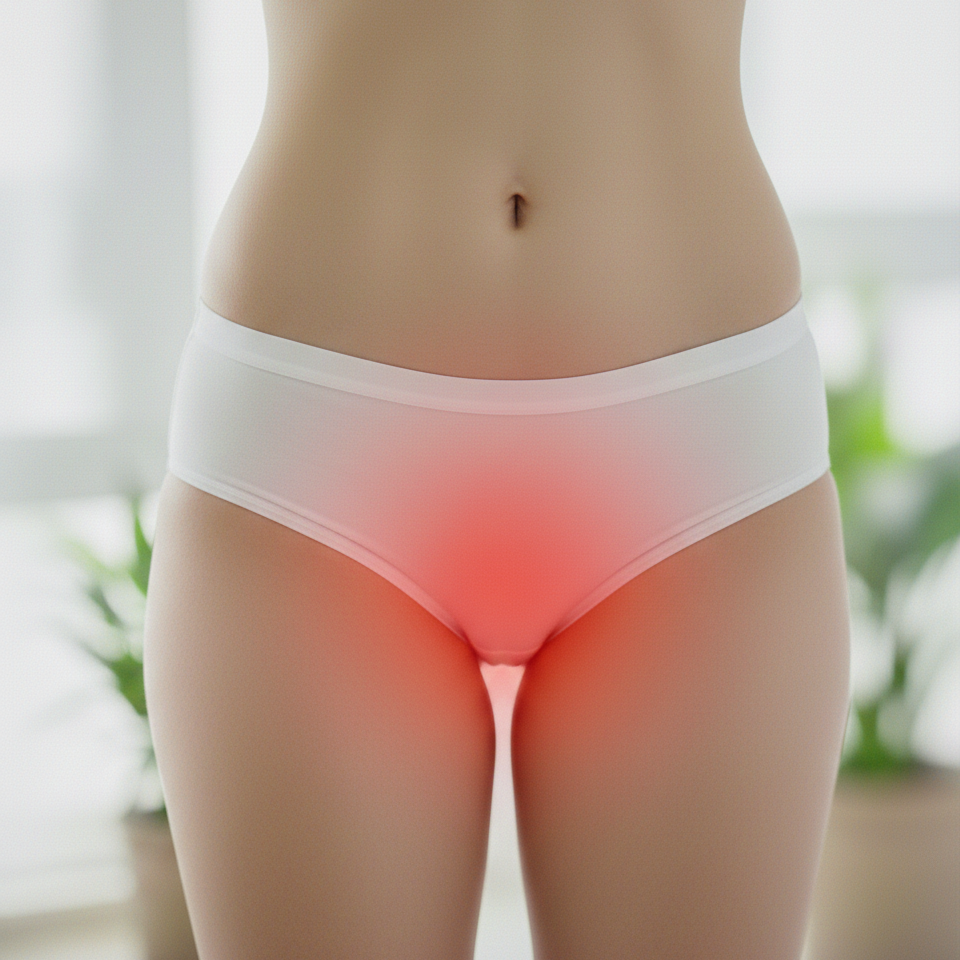
Fertility-Specific Considerations
Proximity to the posterior fornix places light closer to the ovarian and uterine environment
Lower-dose stimulation aligns with emerging research on endometrial receptivity
Internal delivery avoids unnecessary exposure to surrounding tissues
Consistent placement supports repeatable treatment sessions
Intended to support fertility care plans, not replace medical treatment
“In fertility-focused use, accurate placement determines whether light reaches relevant pelvic structures.”
Painful Intercourse and Pelvic Tissue Sensitivity
RELIEF IS POSSIBLE
Pain with penetration rarely has a single cause. It often involves a combination of muscle guarding, sensitive or restricted scar tissue, hormonal changes that affect tissue quality, and heightened nerve response. Discomfort usually reflects how these factors interact within the pelvic floor and surrounding tissues.
Internal pelvic light therapy offers a way to work with these tissues deliberately rather than forcefully. Red and near-infrared light can support circulation and tissue metabolism, while vibration can help reduce guarding and improve sensory feedback. Used correctly, this allows painful areas to be approached progressively, which matters when pain has been present for some time.
Red light therapy has also been explored as a non-hormonal option for supporting vaginal tissue health and lubrication. Some women notice changes relatively quickly, while others need a slower approach, especially when pelvic floor tension, nerve sensitivity, or scar tissue are involved.
In more complex cases, internal work is often paired with external support, such as light applied to surrounding tissues, breath work, and gentle acupressure, to help reduce protective muscle holding over time.
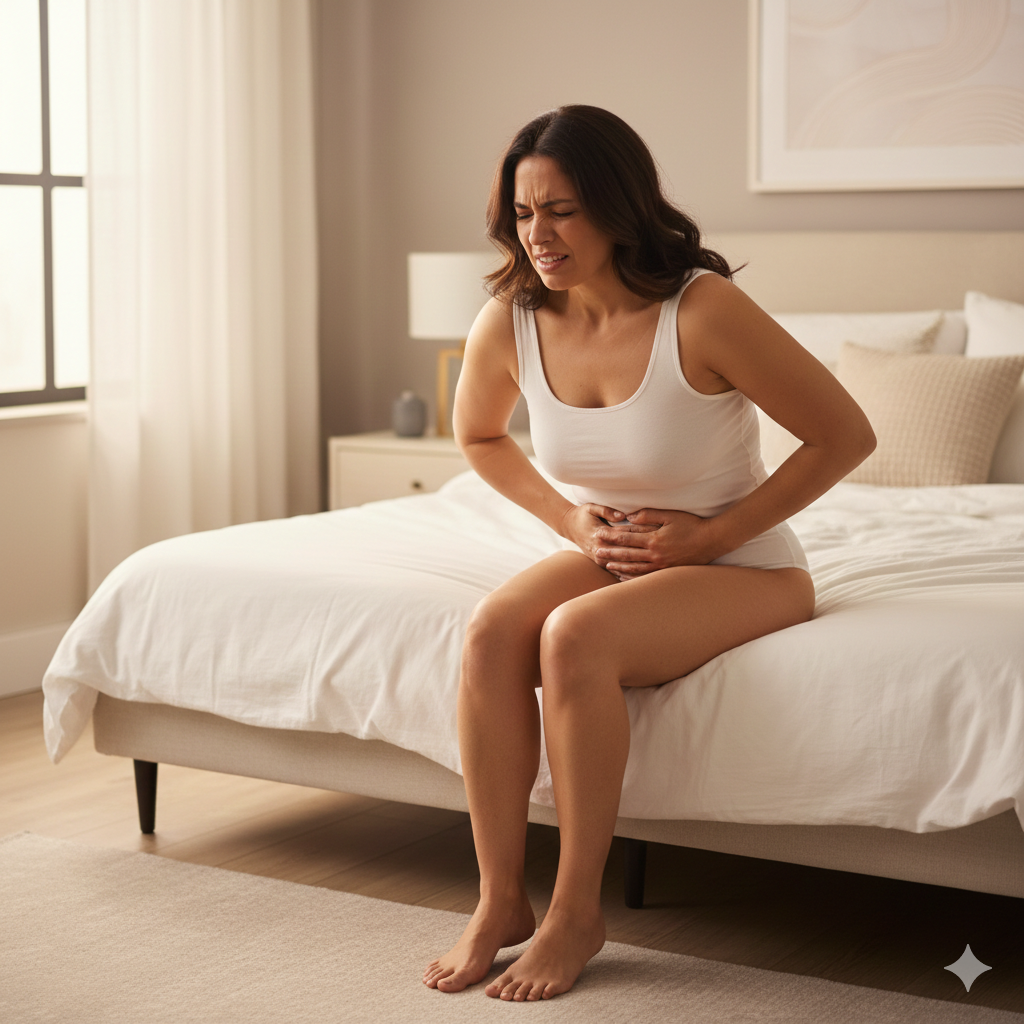
Common Drivers of Penetration Pain
Muscle guarding and protective pelvic floor tension
Hormonal changes affecting tissue comfort and lubrication
Nerve-related sensitivity or heightened pain response
Sensitive or restricted tissue, including scar tissue
Heightened protective response to penetration
“Pain with penetration is often a protective response rather than a flaw or failure. When pain persists, it is rarely about effort or tolerance. It reflects how muscles, nerves, and tissue are responding together. This is not something you simply have to live with.”
SUPPORTING RECOVERY AS TISSUES REPAIR AND REBALANCE AFTER BIRTH
Postpartum Healing
Postpartum recovery places unique demands on pelvic and perineal tissues. Swelling, soreness, tearing, incision healing, and changes in circulation are common after both vaginal and cesarean births. The Fringe Pelvic Wand combines red, near infrared, and blue light with vibration to support tissue recovery during this period as part of a broader postpartum care plan.
Red and near infrared light are being studied for their role in reducing inflammation, supporting circulation, and encouraging tissue repair in sensitive pelvic and perineal areas. In the early postpartum phase, the wand is typically used externally on the vulva and perineum to support comfort while tissues are healing. Internal use may be introduced later, with guidance, once the body is ready.
For women recovering from vaginal tears, episiotomies, or general birth-related swelling, consistent external use may help ease tenderness and support the natural healing process. For cesarean recovery, the wand can also be used externally along a closed, healed incision. Blue light is used at the skin surface to support cleanliness and comfort, while near infrared light penetrates more deeply to support circulation, tissue repair, and reduced inflammation as scar tissue matures.
Related Blog Post
A closer look at how the pelvic wand can be used throughout postpartum recovery
Postpartum healing is rarely linear. Tissue recovery, nerve response, and comfort change over time. A flexible approach that adapts to each stage of recovery is often what makes ongoing support both effective and sustainable.
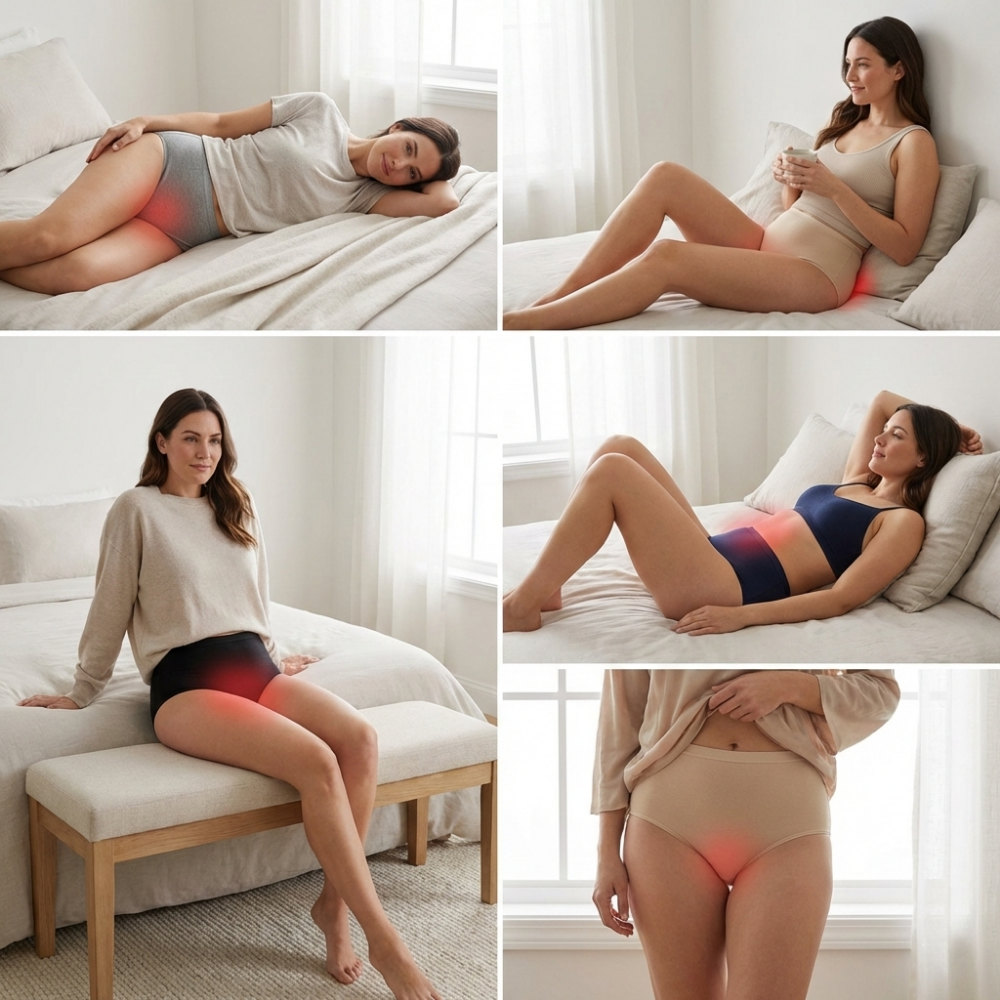
Postpartum Healing Applications of the Fringe Pelvic Wand
-
Soreness and tenderness in the vulva and perineum are common after vaginal birth due to tissue stretching, swelling, and micro-trauma. Targeted external light therapy can support comfort and circulation in these sensitive areas as early healing begins.
-
Healing after tears or an episiotomy often involves ongoing tenderness and sensitivity as tissue repairs. External use can support the natural healing process while tissues regain strength and resilience over time.
-
Swelling and generalized pelvic discomfort are common in the weeks following birth. Supporting circulation and tissue response during this phase can help ease pressure and improve overall comfort as the body recovers.
-
Once a cesarean incision is fully closed and healed, external light therapy can be used to support comfort and tissue repair around the scar as it matures. This approach is intended to complement, not replace, standard postoperative care.
-
Postpartum healing continues well beyond the early weeks after birth. As scar tissue and surrounding structures adapt, ongoing support can help address lingering sensitivity and promote longer-term comfort.
ADDRESSING INFLAMMATION, MUSCLE GUARDING, AND TISSUE SENSITIVITY
Pelvic Pain Support With Internal Red Light Therapy
Pelvic pain is a broad term that includes many overlapping conditions, including endometriosis, prolapse, painful intercourse, postpartum trauma, menopause related changes, and nerve sensitivity. In practice, pelvic pain rarely affects only one structure or one system. When discomfort persists, it often involves a combination of inflammation, tissue irritation, muscle guarding, and heightened nervous system response.
Ongoing pelvic pain can also affect more than physical comfort. It often impacts confidence, intimacy, relationships, and emotional wellbeing, especially when the pelvis no longer feels like a safe or neutral part of the body. For many women, pain becomes something they work around rather than resolve.
Internal pelvic light therapy offers a way to work with pain at the tissue and nervous system level. Red and near infrared light may help calm inflammatory signaling and support tissue repair, while gentle vibration can encourage overprotective pelvic floor muscles to soften and release. This combination allows the body to reduce guarding gradually rather than being pushed through pain.
In clinical settings, pelvic photobiomodulation is often used alongside pelvic floor physical therapy and other care. Experience with this approach points to meaningful reductions in pain and improvements in quality of life, which is why a consistent home tool can be a powerful adjunct. Not only for physical comfort, but for rebuilding trust in the body over time.
Common Pelvic Pain Presentations
Chronic pelvic pain with no single clear cause
Pain related to endometriosis or pelvic inflammation
Muscle guarding and pelvic floor overactivity
Nerve sensitivity or burning, aching, or pulling sensations
Pain that affects intimacy, daily comfort, or movement
Pelvic Pain and Light Therapy in Practice
Hear how pelvic floor therapists are using the Fringe Wand in clinical care, and how internal light therapy fits into real world treatment approaches.
REDUCING GUARDING AND RESTORING HEALTHY MUSCLE RESPONSE
Pelvic Floor Tension Support With Internal Pelvic Light Therapy
Pelvic floor tension often shows up as a constant sense of clenching, pressure, or tightness that feels difficult to release. For many women, this tension is not voluntary. It develops as a protective response to pain, stress, trauma, hormonal changes, or repeated discomfort in the pelvis. Over time, muscles that are meant to contract and relax become stuck in a shortened, guarded state.
When pelvic floor muscles remain overactive, they can contribute to pain, difficulty with penetration, urinary symptoms, and a general feeling of discomfort or heaviness in the pelvis. Simply telling the muscles to relax rarely works. The nervous system needs input that signals safety before the body will let go of that tension.
Internal pelvic light therapy offers a gentle way to support this process. Red and near infrared light helps improve circulation and tissue flexibility, while low level vibration provides neuromuscular input that encourages guarded muscles to soften and lengthen. Used together, these signals help reduce protective holding rather than forcing release.
For many women, pelvic floor tension responds best when internal work is paired with breath-work and nervous system regulation. This is why Fringe protocols often include guided audio to support relaxation during internal sessions. Over time, consistent use can make internal release work more comfortable and help restore a healthier balance between contraction and relaxation.
Common Signs of Pelvic Floor Tension
Persistent clenching or pressure in the pelvis
Difficulty relaxing during penetration or exams
Pain that improves briefly but returns quickly
Urinary urgency or incomplete emptying
Discomfort linked to stress or nervous system activation
Pelvic floor tension is maintained by muscle guarding and nervous system response. When those signals change, the body can begin to release.
SUPPORTING COMFORT, TISSUE QUALITY, AND SURFACE HEALTH
Vulvar Discomfort or Dryness
Vulvar discomfort can include burning, irritation, dryness, or a persistent sense of sensitivity that affects daily comfort and intimacy. These symptoms may be linked to hormonal changes, postpartum recovery, menopause, recurrent irritation, or shifts in tissue integrity over time. For many women, discomfort is localized to the vulva or vestibule rather than deeper pelvic structures.
In these cases, the Pelvic Wand can be used externally without insertion, allowing light to be delivered directly to sensitive surface tissues. Red light may support circulation and healthy tissue turnover, which can help improve comfort and resilience in vulvar tissue. Consistent external use is often preferred when tenderness or irritation makes internal work uncomfortable.
Blue light offers an additional option when surface imbalance or infection risk is a concern, as it can be used externally to support skin level hygiene and comfort. Research into red light based vaginal therapies has also suggested improvements in hydration, elasticity, and overall tissue integrity, making light therapy a non hormonal option for ongoing vulvar and vaginal wellness.
As with other pelvic concerns, outcomes depend on correct placement, appropriate dosing, and consistency. External protocols are typically simple and can be adapted over time as tissue comfort and sensitivity change.
The Everyday Impact of Vulvar Discomfort
Pulling away from physical closeness or intimacy
Discomfort that interferes with everyday movement
Touch that feels unpredictable or hard to trust
Recovery after birth that changes how your body feels
Menopause-related changes that affect comfort or desire






DESIGNED FOR VAGINAL USE
Red Light Therapy Pelvic Wand
When you purchase your wand from me, you receive a free personalized protocol that matches the device’s technical capabilities with your health history and the issue you want to improve.
Designed for comfort, healing, and targeted pelvic treatment.
Medical-grade soft silicone for comfortable internal and external use
Three light modes using red (630 nm), near-infrared (830 nm), and blue (415 nm) LEDs
Optional vibration setting to support relaxation and circulation
Cordless and fully waterproof
Simple 10-minute automatic session timer
Rechargeable and easy to clean
Gives you a precise, gentle way to support pelvic healing and overall comfort at home.
$415

Internal and external PBM are not interchangeable. They work on different structures, deliver light through different tissue types, and create different physiological effects. Understanding the distinction helps people choose the right tool for the issue they’re addressing.
Internal vs External Pelvic Light Therapy
Internal
Internal light therapy reaches an entirely different category of tissue. Vaginal mucosa absorbs light far more efficiently than external skin, allowing red and near-infrared wavelengths to travel deeper with less loss of power.
Internal light therapy is most effective for:
Fertility-related pelvic concerns (blood flow, tissue metabolism, endometrial support)
Healing perineal tissue, scar tissue and dryness
Painful intercourse and pelvic floor hypertonicity
Vaginal dryness or menopausal tissue changes
Vulvar discomfort when internal structures are involved
Nerve-related pelvic pain rooted deeper in the pelvis
External
External laser therapy works through the skin and fascia, delivering concentrated red and near-infrared light into surface and mid-depth tissues.
External light therapy is most effective for:
Circulation and inflammation in the lower abdomen and pelvis
Pelvic floor overactivity and muscular tension
Low back pain and sacral discomfort
Cesarean scar healing and external scar modulation
Vulvar discomfort when external only
Nerve irritation that responds to targeted surface dosing
Internal and external devices serve different purposes in pelvic and reproductive health.
Internal light therapy delivers wavelengths directly to mucosal tissues and deeper pelvic structures. This is ideal for concerns involving the vaginal canal, cervix, pelvic floor, vulvar tissue, and circulation within the pelvis.
External laser therapy is designed for the tissues you reach from the outside-lower abdomen, ovaries, uterus, pelvic nerves, lower back, cesarean scars, hips, and surrounding soft tissue. A clinical-grade handheld laser offers concentrated dosing and deeper penetration, which is why it is often paired with internal work when someone is addressing fertility, postpartum recovery, pelvic pain, or hormonal shifts.
Both approaches support different structures and different depths. Some people use only one device. Many benefit from both because internal and external tissues often contribute to the same symptoms.
If external treatment is part of your plan, the Solasta Handheld Laser is the device I use and recommend for home care.